Life Is Changing Fast- Major Shifts Driving Life In 2026/27
Wiki Article
Top 10 Remote Work Trends Changing What's Happening In The Modern Workplace In 2026/27
Workplace practices have evolved more rapidly in recent years than the previous several decades. Flexible and hybrid working arrangements are moving from an emergency measure to permanent arrangements and the ripple effects are present across organisations or cities as well as careers. For some, the shift has been liberating. Others, it has been a source of real concern about productivity growth, culture, and advancement. The fact is that there's no way into the past. Here are the ten remote work trends that are transforming our workplace into 2026/27.
1. Hybrid Work Became The Leading ModelThe debate on fully remote over fully on-site has been settled on a sensible middle space. Hybrid or hybrid working, in which employees are able to split their time between home and the physical workplace is now the predominant strategy across a wide range of industries that are based on knowledge. There are many variations in the details in the form of structured two or three day office requirements, to fully flexible working arrangements built around demands of the team. The reality for most organizations is that rigid 5-day office schedules are becoming difficult to justify for employees who have shown that they can provide results wherever they are.
2. Asynchronous Communication Takes PriorityAs teams become more dispersed geographically and time zones change The assumption that everyone has to be on the same page at the same time is fading away. Asynchronous communication, in which messages, updates, and decisions are logged and responded to in the individual's time, is becoming a genuine company priority rather that as an afterthought. Tools built around async workflows have gained ground, and the shift in culture towards empowering people to manage their own time rather than watching their online activity is beginning to gain momentum.
3. AI-powered productivity tools change the way we do WorkThe incorporation of AI into tools for everyday use has accelerated faster than most thought. From meeting summaries to automated task management, to AI writing aids and intelligent scheduling, the technological toolkit for remote workers by 2026/27 is vastly different from just two years ago. Most significant is not any single tool however the effect of AI in the administration layer of the job, allowing workers to focus more time on the tasks that require human judgement and creativity.
4. It is when the Home Office Becomes A Serious InvestmentOver the last few years, there has been a widespread shift to remote working The improvised kitchen table is now transforming to home office spaces that are specifically designed for use. Workers and employers alike are now recognizing the work space as an infrastructure that is worth investing in. Acuity-friendly furniture, professional electrical lighting as well as high-quality audio and video technology are becoming more common than premium. Some employers have now started offering space for home-based offices a part as a benefit plan, believing that a well-equipped remote worker is a more effective one.
5. Digital Nomadism Gains Mainstream LegitimacyWhat was once a style of living that was popular among self-employed and freelancers has now become now a standard working arrangement to employees of established companies. Numerous companies offer flexible policies on location that permit employees to work from multiple countries for prolonged time frames, provided that tax and compliance conditions are met. The infrastructure that enables this kind of lifestyle which includes co-working platforms to nomad visa programmes that are provided by many nations, is growing and develop.
6. Remote Work Culture needs deliberate DesignOne of the biggest problems with distributed work do you agree is ensuring a cohesive team culture when people rarely ever or never meet physically. Companies that are successful are realizing that a culture in remote environments does not emerge naturally. It must be planned. It is a matter of deliberate onboarding processes frequent structured touchpoints social rituals for virtual groups, and distinct frameworks for recognition and the process of growth. Organizations that view culture as something that is only a thing to be found in the workplace are continually losing ground in both retention and engagement.
7. Cybersecurity For Remote Workers Gets Tighter SignificantlyThe proliferation of remote work greatly increased the amount of attack opportunities that cybercriminals can exploit, and responses from businesses have been important. Zero-trust security solutions, mandatory VPN usage, endpoint monitoring, and multi-factor authentication are baseline expectations rather than advanced security measures. Security training for employees has now become regular requirement rather that an annual induction process, reflecting the reality that remote workers who are not within corporate network perimeters represent both an attack point and a starting option for defense.
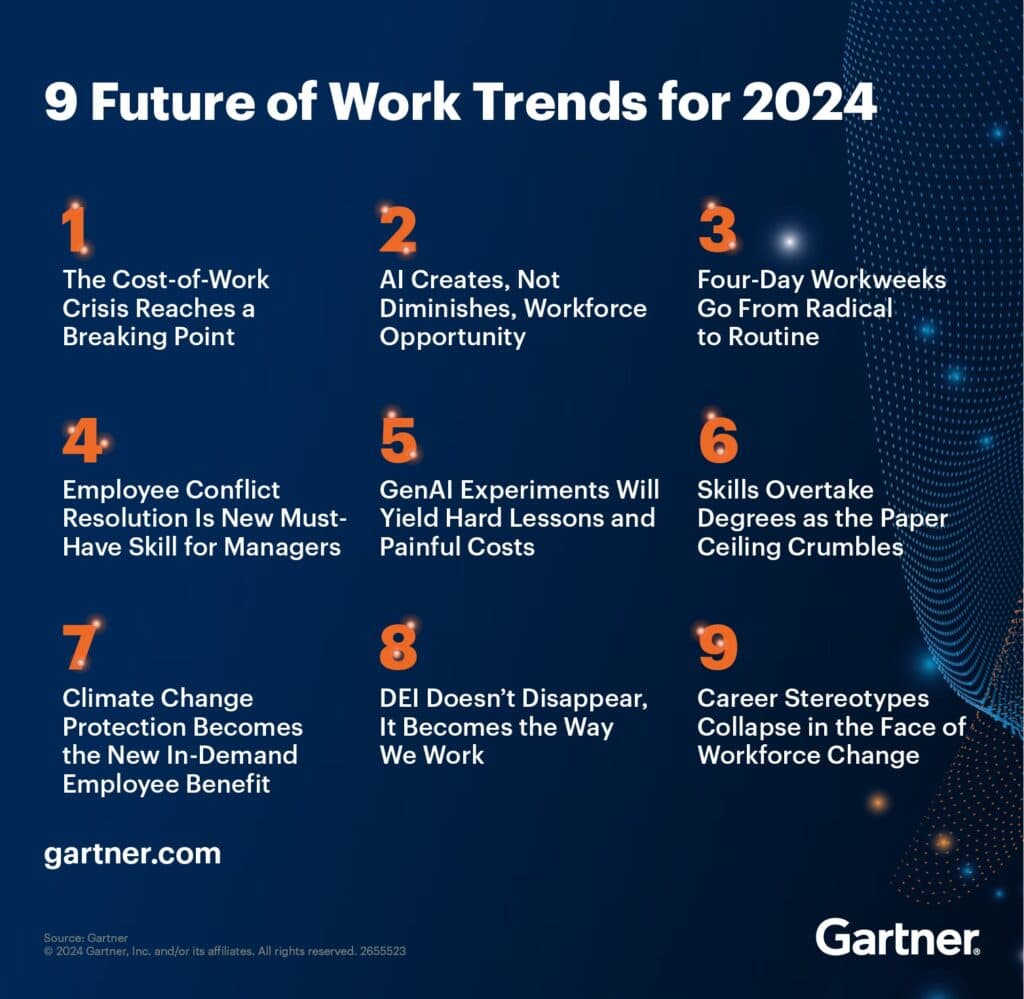
8. "The Four-Day Work Week Gains TractionPilot programs that test a four-day week of work have consistently produced positive results across different industries and countries, and more companies are moving from trial to continuous adoption. The underlying argument, that output and focus matter more than hours worked, coincides naturally with the remote working concept. For companies competing for workers in a marketplace where flexibility is a key importance, the four-day working week has evolved from a radical attempt to be a convincing differentiator.
9. Performance Measurement Shifts To ResultsThe management of remote teams through observing activities, tracking copyright times or monitoring screen usage has proven both imperfeccably and damaging to trust. The shift to outcome-based management, where employees are judged on the quality of work they produce rather than how it appears they are busy is one of many significant changes to the way in which culture remote work has accelerated. This requires clearer goal setting, more frequent check-ins, and supervisors who can operate without control. Also, it requires more accountability for employees.
10. Affects Mental Health And Boundaries Become Organisational ResponsibilitiesThe blurring of home and work life that remote work can result in has brought the mental health of employees and boundary-setting on the corporate agenda. Burnout anxiety, isolation, and constantly-on working patterns are recognised risks rather than personal failings, and employers are increasingly required to tackle them to a greater extent. Working hours policies, requirements for right-to-disconnect, access to medical support for mental health, as well as proactive manager training are all being made standard in what a responsible remote friendly employer should look like by 2026/27.
The change in work is ongoing and uneven, across different roles, industries and people experiencing the change in a variety of ways. What these trends are sharing is a common path: toward greater flexibility, more carefully planned communication, and fundamental rethinking of the what means that a workplace is productive. Companies that get serious about these changes are who create workplaces that you can feel proud to belong to. For further detail, check out some of the best trendmedie.dk/ to read more.
 Top 10 Online Learning Trends Reshaping Learning In 2027
The education industry is undergoing a paradigm shift that is as important as the previous ones, due to technology that is change not just how education takes place but also the is to learn, what is worthwhile to learn and who gets to be the ones doing it. The landscape of online learning for 2026/27 resides at the crossroads of technological advancements, disruptive credentialing changes in the demands of the labour market and an ever-growing recognition that the old concept of a system of education based on the front loaded and backed by decades of unchanging knowledge is no longer appropriate for the world that evolves as rapidly as it is now. These are the ten most important online learning trends that are revolutionizing education going into 2026/27.
1. AI tutors deliver genuinely personalised LearningThe promise of personalized education and instruction that is tailored to the individual pace, learning style as well as knowledge gaps and requirements of each child, has been in the works for decades, but without being deliverable at scale. AI tutoring systems are now making it real. Platforms that can adapt as quickly as learners respond, detect doubts before they become ingrained as well as adjust difficulty dynamically and provide explanations in multiple ways until one is creating measurable learning outcomes which compare favorably with traditional methods of instruction. Its greatest impact lies in increasing access to the personalised attention that was traditionally available only for those who could afford private tutoring.
2. Micro-Credentials and Skills-Based Certificates Gain GroundThe traditional diploma isn't being relegated to the background, but its power in credentialing is slowly eroding. Employers in a growing range of sectors are placing greater importance on the demonstrated abilities and relevant certifications than on the nature or value of a degree. Micro-credentials, or short courses in which you can demonstrate your specific expertise, are issued by technology platforms, universities professional bodies, as well as employers themselves. The challenge is to build systems that make these credentials can be read authentic, verifiable, and acceptable across organisational boundaries. Blockchain-based credential verification, as well as growing employers' recognition of specific platform credentials are both contributing to solving the issue.
3. The Lifelong Learning Process is Now A Professional NeedThe rapid pace of change across every sector results in that knowledge and skills acquired during the course of their education have less usefulness as compared to any other point. Continuously reskilling and upskilling are no longer optional options for the ambitious, but they are essential for anyone looking to remain relevant in a working market that is reshaped by automation and AI faster than any other technological advancement. Online learning platforms provide the primary platform by which this continuous professional development is taking place, and the demand for adult education is growing significantly as employers, employees and even government officials all invest in building it.
4. Immersive Learning Environments use VR And SimulationVirtual reality and simulation-based learning are moving beyond novelty into genuine pedagogical effectiveness in specific areas. Medical students rehearse operations in virtual surroundings before touching a patient. Engineering students demolish and reconstruct their virtual equipment. Language learners practise conversation in simulated real-world scenarios. The evidence for immersion learning in high-risk skills development is growing, and the cost of the hardware needed is decreasing. For learning scenarios where the risk of making mistakes in real world environments is very high, or where access to real-world environments is restricted, immersive simulation is proving its value.
5. Social and Cohort-Based Learning Reclaims GroundEarly online learning was largely solitary, a learner alone with their content. The recognition that much of what makes education valuable is social, the discussion, debate, peer feedback, shared struggle, and relationship-building that happen between people learning together, has driven investment in cohort-based formats that recreate something of the classroom dynamic in an online context. Live sessions based programs, peer collaboration, group projects, and shared achievement are delivering rates of completion and learning outcomes that are significantly higher than self-paced, solo formats. The community around learning is increasingly recognised as a feature rather than as a necessary condition.
6. Employer-led Education Expends SignificantlyDisappointed by the disparity between what traditional education can produce and what the students actually need, more large corporations are investing in the development of learning programs that develop the skills they require. Academies within the internal academies, partnerships with universities and online platforms, as well as sponsored learning pathways, and direct credentials programmes created in partnership with industry are all expanding. The distinction between education and employment is becoming more permeabilized, with learning increasingly happening throughout the course of a career instead of being only concentrated at the beginning. The education provided by employers often provide direct pathways to employment that conventional degrees aren't able to guarantee.
7. Learning Analytics will allow for earlier and Effective InterventionThe data generated by online learning platforms offers a granular picture of how people learn, where they struggle and what motivates them to learn and how they predict dropping out unlike any traditional classroom could match. Learning analytics tools make the data useful and empowering, enabling teachers and platform designers to recognize learners who are at risk from disengagement in a timely manner for intervention, to comprehend which content and pedagogical approaches result in the best results for the learner profile, and to constantly improve the design of courses that is based on data from multiple sources instead of intuitive. If used effectively, analytics can assist in making online learning more flexible and efficient over time.
8. Language Learning is Transformed by AI Conversation PartnersLanguage acquisition requires significant practice in realistic conversational contexts that have been the most difficult aspect for self-directed learners to gain access. AI conversation partners that respond in real time, adapt depending on the level of learning and correct mistakes constructively and create a vast array of situations in conversation are changing the ways that independent language learners. The high-quality of AI-powered practice has reached an extent where the ability to communicate effectively can be built without a human partner, significantly increasing opportunities for effective language learning for the millions of people worldwide who want it.
9. Content Abundance Shifts Value Toward Direction and CurationThe quantity of high-quality educational material available online is now so vast that the problem of scarcity in education has changed fundamentally. The problem is no longer access to material, but the capability to know what's worth studying, in what order, and with what support. The most sought-after online learning experiences by 2026/27 will provide not just content, but also knowledge, context, pathways, and a specialized direction that enables learners to navigate their way through the maze of content. The educators and platforms that are thriving are those that assist people in learning how to be better learners, not only the ones that provide information in a timely manner.
10. Education Technology faces increasing scrutiny Over OutcomesThe rapid growth of the edtech sector isn't accompanied by regular, rigorous assessments of whether its products are actually delivering the learning outcomes they claim. A growing amount of research in addition to regulatory and consumer disbelief is requiring higher standards for evidence provided by learning platforms, credential programs as well as AI tool for teaching. The most trustworthy players in the market are reacting by investing in independent result evaluation, clear data on completion and employment data, and product design that prioritizes learning rather than engagement metrics. The demand for accountability is a positive thing for the sector, whose business model depends on actually delivering what it promises.
Education has been reflective of society, and an instrument to alter it. The current trends in online learning 2026/27 reflect a world that is in deep debate about what people require to know, how they learn best as well as who should have access to the instruments that enable learning. The trend is generally encouraging: toward greater access, more personalisation, and an honest assessment of the real purpose of education. The key is to ensure that the new system is beneficial for everyone rather than merely making existing advantages more efficient to accumulate. To find additional context, head to these reliable medienlogik.de/ to read more.
 Report this wiki page